
- Log in to post comments
With a collection age of 2008, the South Park School nonfiction collection was out-of-date and not relevant to the interests of twenty-first century elementary students. Almost one third of the books in the collection had not circulated at all in the past five years, or had only circulated once. The collection was in need of serious weeding and an infusion of new books on subjects of interest to our students. More than that, students checked out the same few books over and over again, and it seemed to be that these were the only books they could locate. I wanted to see if changing the organization system from a simplified version of Dewey Decimal Classification to a more student-centered design would improve students' ability to find books on a variety of topics. I was aware of some alternative classification systems in school and public libraries, and I wanted to investigate using one in my own collection.
The Process
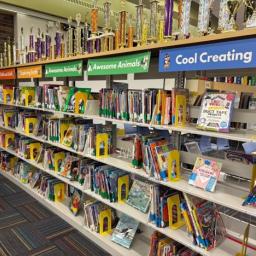
I began this project by weeding any books that had not circulated in five or more years. This was a noticeable reduction of books, but I knew our collection would likely end up smaller than it began to allow more space for dynamic shelving practices and more attention-grabbing display methods. I wanted students to see exciting information rather than just a wall of book spines.
Next, I engaged my students in surveys about their interests and understandings of how topics should be organized. The new collection is organized according to a modified version of the Metis Classification System, developed by the librarians at the Ethical Culture School of New York City. But since Metis was devised almost twenty years ago in a very different setting, I wasn’t sure if it would be a good match for my students’ understanding of information. To determine how well the system would fit our needs, I had a focus group of students sort cards representing forty of our actual books into the main categories of Metis. As a result, I used many of those categories but adapted them somewhat to better match my own students’ understandings. I also utilized some of the principles of dynamic shelving with more front-facing books and bins for individual sections to make everything more eye-catching.
Another source of student input related to areas of interest. I surveyed the student population about topics that they would like to read about. I also took my student ‘Library Squad’ on a field trip to the public library. There, our outreach librarian met with us to give some book talks on newer nonfiction books and series that would be of interest to our students. The students had time to peruse and rate the books and decide which ones they recommended we purchase.
The Results
The results of the collection refreshment have been very positive. When a student focus group was surveyed about their feelings on the new collection, 74% said that it was easier to use, and students now also found it easier to locate books about new topics. Students and teachers immediately commented on the colorful signage, and circulation increased right away. In the first three months the new collection was available, 854 nonfiction books circulated, compared to 742 nonfiction books from that same time-period last year. The collection age has also decreased to 2017. I am happy with the improved relevance of my nonfiction collection, and I expect it to help my library create more enthusiastic readers. The My Library is… Grant made this possible, and my students will benefit for many years to come.
Today's blog post was written by Kelly Jahng, School Librarian at South Park School in Deerfield School District 109.
This project was made possible by the My Library Is... Grant.