
Looking for school library advocacy resources? You're in the right place!
Whether you're a school librarian, teacher, library colleague, concerned parent, or community member, we hope you'll find the information and resources you need in this online resource.
If you know what you're looking for, jump to:
Not sure where to begin? Start here.
Advocacy Concerns
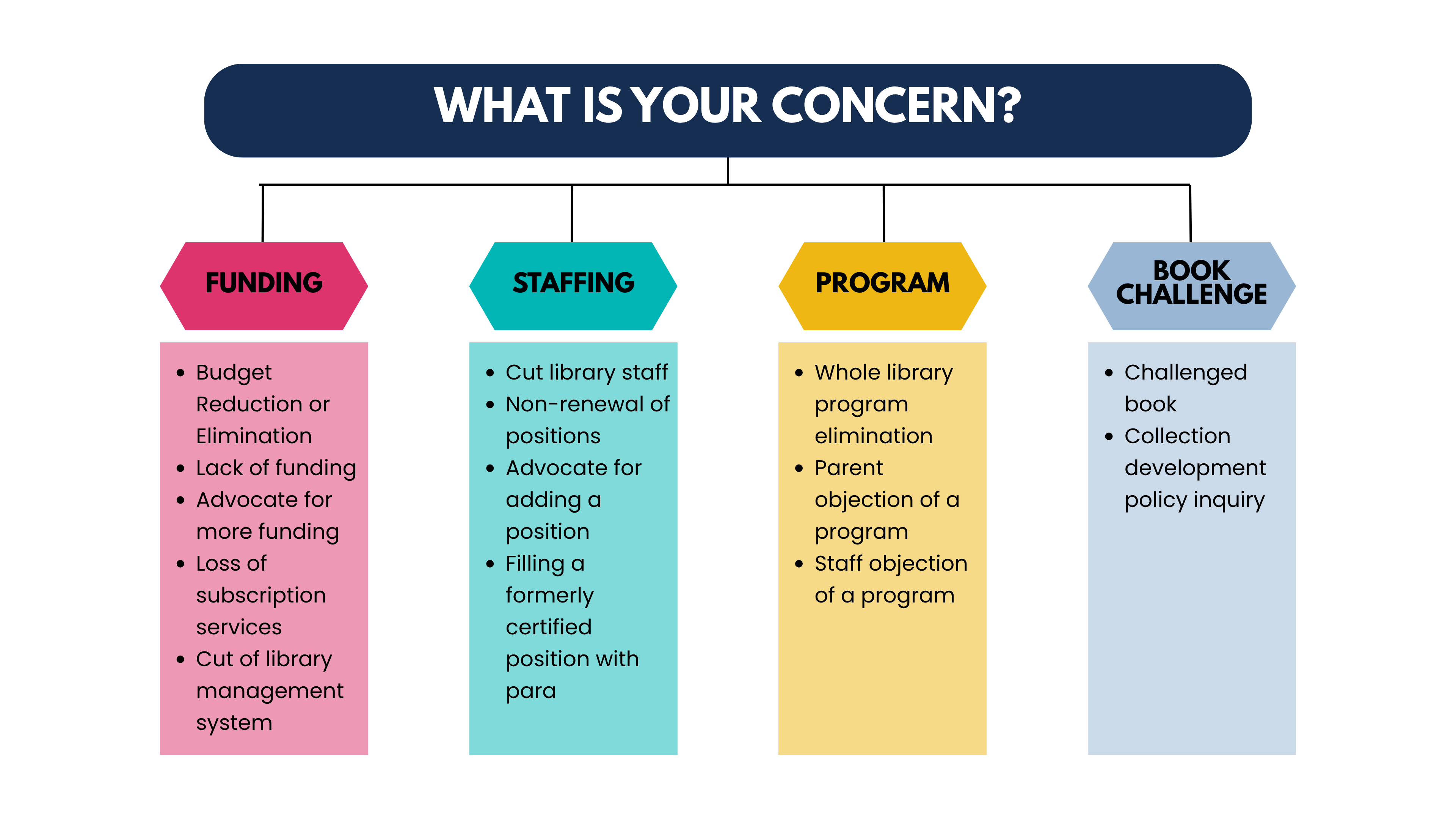
School library advocacy has many different facets, and just like your community, each situation is unique and different. The first step to determining the best course of action is identifying your advocacy concern.
Advocacy Assessment
When a library position, program, budget, collection, or service is threatened, quick action is essential. Use the chart below to determine your level of advocacy need and urgency. Click the links to view additional information that will help you make decisions and take action.
Advocacy Resources
In the sections below, find and explore a wide variety of advocacy resources.
This section includes library organizations and agencies you can reach out to for support. See the information below, any and all are wiling to help!
How They Can Help:
- Advocacy Resources
- Advocacy Support
- Outreach
- Media Contacts
Who To Contact:
Function Representative, Advocacy Committee
Function Representative, Intellectual Freedom Committee
How They Can Help:
- Advocacy Assistance
- Resources
- Networking
- Crisis Management
Who To Contact:
How They Can Help:
- Book Challenges
- Censorship
- Intellectual Freedom
Who To Contact:
How They Can Help:
- Grants
- General Assistance
Who To Contact:
Associate Director, Grants & Programs
Library Program Specialist
How They Can Help:
- Advocacy Assistance
- SLATE/School Library Data
- Resources
- Networking
- Crisis Management
Who To Contact:
Data Analyst, SLATE Project
Member Engagement Specialist
How They Can Help:
- Advocacy Assistance
- Legislative Issues
- Resources
Who To Contact:
There are a number of Illinois statutes that govern schools and libraries included below. Your school or district may have additional policies or mandates that govern the library media program in your area, so be sure to check your local school policies in addition to what's listed here.
The Illinois School Code is the state law that governs public education in our state. It sets the powers and duties of the Illinois State Board of Education (ISBE), Regional superintendents, and local school boards.
Within this code, there are several sections that pertain to school libraries, but particularly 105ILCS 5/18-8.15 which pertains to Evidence-Based Funding and includes the following definition of a school librarian:
"Librarian" means a teacher with an endorsement as a library information specialist or another individual whose primary responsibility is overseeing library resources within an Organizational Unit.”
105ILCS 5/18-8.15
It also specifies librarian investments recommended as part of the Evidence-Based Funding for student success model implemented in 2017-2018 (PA 104-2):
(I) Librarian investments. Each Organizational Unit shall receive the funding needed to cover one FTE librarian for each prototypical elementary school, middle school, and high school and one FTE aide or media technician for every 300 combined ASE of pre-kindergarten children with disabilities and all kindergarten through grade 12 students.
105ILCS 5/18-8.15
Prototypical schools are defined in the code based on grade level and enrollment:
- Elementary School: 450 special education, pre-kindergarten, and K-5 students
- Middle School: 450 6th - 8th grade students
- High School: 600 9th - 12th grade students
The Illinois Administrative Code is the official compilation of rules and code governing state agencies and organizations. This code is maintained by the Secretary of State.
Title 23 of the Illinois Administrative Code addresses rules and policies regarding education and cultural institutions, including school library media programs. Requirements for school libraries can be found in Subsection 1.420(o):
o) Library Media Programs
Each school district shall provide a program of library media services for the students in each of its schools. Each district's program shall meet the requirements of this subsection (o).
1) General
The program shall include an organized collection of resources that circulate to students and staff in order to supplement classroom instruction, foster reading for pleasure, enhance information literacy, and support research, as appropriate to students of all abilities in the grade levels served. A district that relies solely upon the collection of a local public library shall maintain evidence that students receive instruction, direction, or assistance in locating and using resources that are applicable to these purposes from an individual who is qualified under Section 1.755 and who is acting on behalf of the school district.
2) Financial Resources
Each district's annual budget shall include an identifiable allocation for resources and supplies for the program, except that a unit district serving fewer than 400 students or an elementary or high school district serving fewer than 200 students may demonstrate that it is meeting its students' needs through alternate means that the district has determined are adequate in light of local circumstances.
3) Facilities
If there is no single location within a particular attendance center that is specifically devoted to a library media center, such as where classroom collections have been established instead, the district shall ensure that equitable access to library media resources is made available to students in all the grade levels served. If students' only access to library media resources is achieved by visiting a location outside their attendance center, the district shall maintain records demonstrating that all students' regular schedules include time for this purpose.
4) Staff
Nothing in this subsection (o)(4) shall be construed as prohibiting districts or schools from sharing the services of individuals qualified under Section 1.755, and nothing in this subsection (o) shall be construed as permitting an individual who is not qualified as a library information specialist to assume that role. Each district shall assign responsibility for overall direction of its program of library media services to an employee who holds a professional educator license endorsed for a teaching or an administrative field. Except as otherwise provided in subsection (o)(4)(A), the individual to whom this responsibility is assigned shall meet the requirements of Section 1.755, and the individual to whom this responsibility is assigned shall not provide the services described in Section 1.755 unless the individual meets the requirements of that Section.
A) If no employee of the district holds any of the qualifications enumerated in Section 1.755, the individual to whom direction of the program is assigned shall be required to participate annually in professional development consisting of:
i) undergraduate or graduate coursework in library science offered by a regionally accredited institution of higher education; or
ii) one or more workshops, seminars, conferences, institutes, symposia, or other similar training events that are offered by the Illinois State Library, a regional library system, or another professional librarians' organization; or
iii) one or more "library academies" if these are made available by or at the direction of the State Superintendent of Education.
B) A district that is otherwise unable to fulfill the requirements of this subsection (o)(4) shall ensure that the overall direction of the library media program (e.g., selection and organization of materials, provision of instruction in information and technology literacy, structuring the work of library paraprofessionals) is accomplished with the advice of an individual who is qualified pursuant to Section 1.755.
23 Ill. Admin. Code § 1.420
Key Elements of the Code:
- States districts should provide a school library media program for students in each school.
- States districts must allocate funds for a school library media program, and the amount allocated should be easily discernible in the district's budget.
- Makes provisions for schools without a central library location and states students using library resources outside of their school must be permitted to do so as part of their regular schedule.
- States schools within a district can share the services of a licensed library information specialist, meaning each school is not required to have its own. It does indicates, however, that each district should have at least one licensed library information specialist on staff who oversees the district's library media program.
- For districts unable to employ a licensed librarian, provides alternatives to providing library service, including training requirements for unlicensed staff employing a qualified consultant to advise or oversee the direction of the library media program.
23 Ill. Admin. Code § 1.755 mentioned above provides the requirements for Library Information Specialists:
a) holds an endorsement for Library Information Specialist or a comparable, previously issued endorsement such as Media or Library Science;
b) is assigned pursuant to 23 Ill. Adm. Code 25.430 (Short-Term Approvals for Teachers at All Grade Levels); or
c) has completed 16 semester hours of library science coursework if licensed prior to July 1, 2004.
23 Ill. Admin. Code § 1.755
ISBE provides guidance on educator licensure on its website. In order to obtain a Library Information Specialist endorsement, an educator must do the following:
- have a Professional Educator License (PEL)
- complete 18 hours of coursework
- pass the Library Information Specialist test (175/220)
The Illinois Library Systems Act (75 ILCS 10/) establishes guidelines for a statewide, cooperative network of library systems to encourage and facilitate resource sharing, public access, and library service for Illinois residents.
Two main parts of this statute are important for school libraries:
- 75 ILCS 10/8.4: states requirements for grant eligibility, including the School District Library Grant
- 75 ILCS 10/1 Secs1, 3, & 8.7 (PA 103-100): prohibits the removal or banning of library materials for political or religious reasons. It requires school libraries to do one of two things to be eligible for state grant funds:
- Adopt the ALA Library Bill of Rights
- Adopt a statement into policy that indicates “materials should not be proscribed or removed based on political, religious, or doctrinal ground or that prohibits banning books or other materials within the library or library system"
PA 103-100 does not replace a district's reconsideration policy or prevent a district from removing material from the library's collection in compliance with its own reconsideration policy.
Information about the School District Library Grant Program, including links to relevant statutes, can be found on the Illinois State Library's website.
Library & Professional Organizations
Support for school libraries and school librarians exists at the national, state, regional, and local levels. Each of the organizations below has adopted or approved a statement or statements of guidance or support which you can access using the links provided.
AISLE's primary mission and goals are to support school libraries and school library professionals. In addition to those statements provided on their website, they have adopted the following statements:
While EveryLibrary does not have a position statement applicable across school libraries, they have discussed what they see as goals for school library advocacy. EveryLibrary will work with libraries and on-the-ground advocates to craft bespoke messaging that meets the needs of local situations.
Because NCTE primarily focuses on ELA educators, they don’t have a direct statement related to school libraries. This is something they may look into drafting in the future, given how much overlap exists between those educators and librarians. The following are useful resources related to support for school libraries and classroom libraries:
Other Statements of Support
Sometimes you need to issue or request a statement of support from a colleague or community partner. Each section below includes examples of statements from other organizations or institutions in support of the school library:
This section features a variety of materials and resources to assist you in your advocacy efforts. Boost your own knowledge or share with stakeholders...it's up to you!
School Library Advocacy Resource Slides
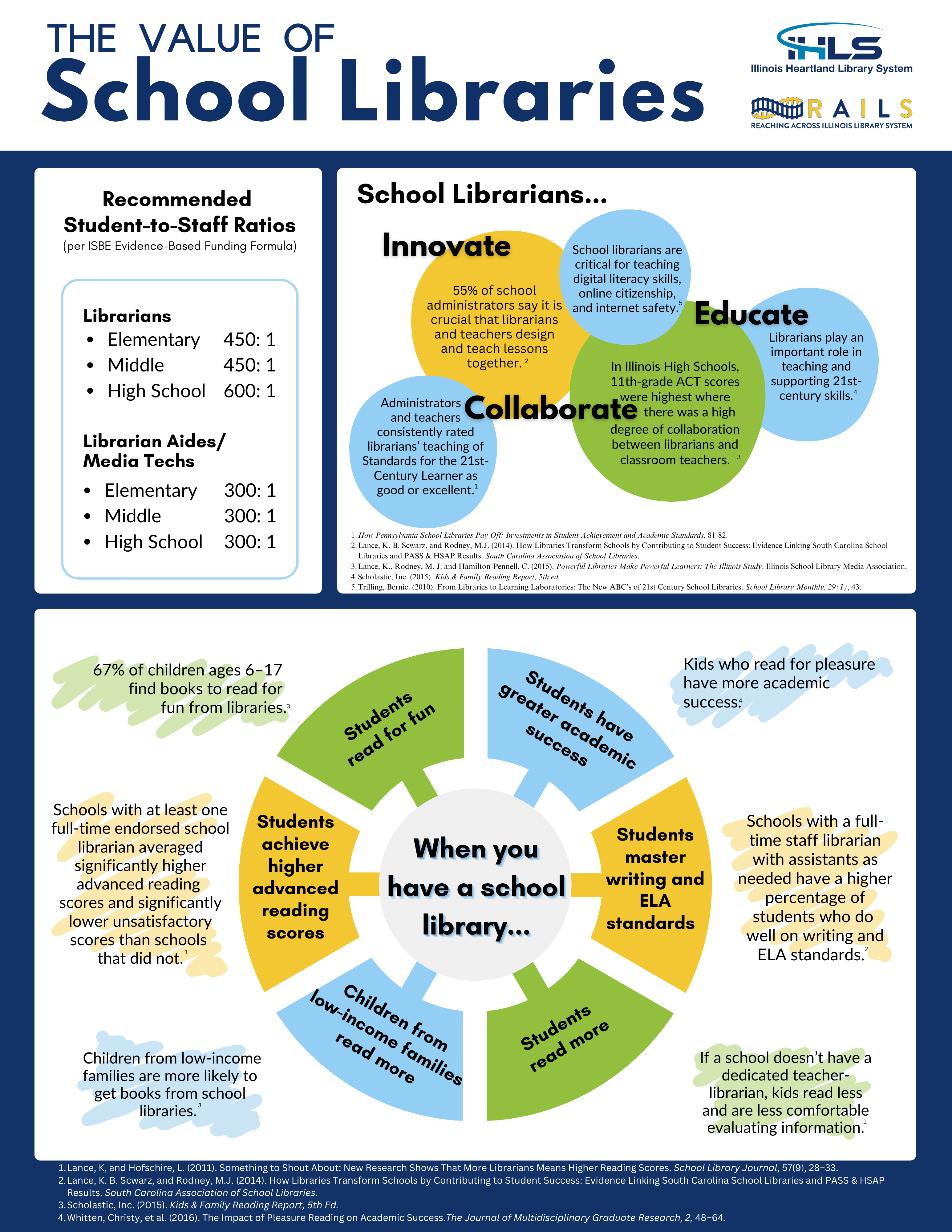
The Value of School Libraries
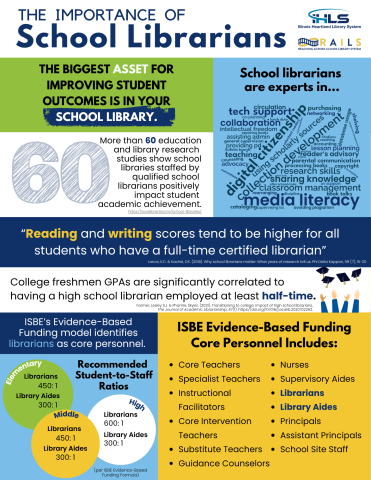
The Importance of School Librarians
ALA State & Local Year-Round Advocacy Checklist
Websites & Online Resources
Outreach to stakeholders and community members is often a crucial part of advocacy work. This section provides templates to help you craft your message and communicate with different audiences.
Reaching out to administration, school board, the community, or other partners can be a scary part of the advocacy process, but it doesn't need to be. Add your personal touch to any of the templates found here to get started making connections that support your efforts.
Templates in this section were created brainstorming and drafting assistance from ChatGPT. You're strongly encouraged to use this as a starting point only - adding your personal tone and voice to the message will make it more compelling, ensuring it has a greater impact.
We're grateful to Library Inclusivity, Rights, and Empowerment (LIRE) for allowing us to connect to their sample scripts and templates.
Your school library's website is a great way to showcase your collection, curriculum, events, and accomplishments! Below are some examples we've found of great school library websites - check them out, get inspired, and let your community know what you have to offer.

Liberty Junior High School
Burbank School District 111

Kelvin Grove Junior High School
Lockport School District 91
- AASL. (2013). Strong School Libraries Build Strong Students (infographic).
- AASL. (2019). Appropriate Staffing for School Libraries.
- IHLS (Gregory, L.) and RAILS (Derucki, J.). (2023). The Value of School Libraries (infographic).
- IHLS (Gregory, L.) and RAILS (Derucki, J.). (2024). The Importance of School Librarians (infographic).
- Farmer, Lesley S.J., and Skyler Phamle. Transitioning to College: Impact of High School Librarians.
- Hand, D. (2017). A Visual Guideline to Staffing Choices in School Libraries.
- How Pennsylvania School Libraries Pay Off: Investments in Student Achievement and Academic Standards, 81-82.
- Lance, K, and Hofschire, L. (2011). Something to Shout About: New Research Shows That More Librarians Means Higher Reading Scores. School Library Journal, 57(9), 28–33.
- Lance, K. & Schwarz, B. & Rodney, M. (2014). How Libraries Transform Schools by Contributing to Student Success: Evidence Linking South Carolina School Libraries and PASS & HSAP Results, Phase II. South Carolina Association of School Libraries.
- Lance, K., Rodney, M. J. and Hamilton-Pennell, C. (2015). Powerful Libraries Make Powerful Learners: The Illinois Study. Illinois School Library Media Association.
- Lance, K. and Kachel, D. (2018). “Why School Librarians Matter: What Years of Research Tell Us.” Kappan Online, 26 Mar. 2018.
- Scholastic. (2024). Key Findings. Kids & Family Reading Report.
- “School Libraries.” I Love Libraries.
- School Library Investigation: Decline or Evolution? (SLIDE) Project
- SLIDE. (2023). Voices of Decision-Makers: How District & School Leaders Decide About School Librarian Employment. Recommendations.
- Trilling, Bernie. (2010). From Libraries to Learning Laboratories: The New ABC’s of 21st Century School Libraries. School Library Monthly, 29(1), 43.
- Whitten, Christy, et al. (2016). The Impact of Pleasure Reading on Academic Success.The Journal of Multidisciplinary Graduate Research, 2, 48–64.
- Illinois has roughly 1400 licensed library information specialists (Source: RAILS, using ISBE ELIS personnel data)
- Approximately 1 in every 3 school library staff members is licensed (Source: RAILS SLATE Project)
- 63% of children get most of their books from public, school, or classroom libraries (Source: Scholastic Kids & Family Reading Report, 8th ed.)